Hello and welcome to my blog! My name is Caroline and I am a PhD student at the University of Sheffield. My research project focuses on Striga - a genus of parasitic plants that devastates harvests by infecting food crops. I am exploring the defence reactions that can make host plants more resistant against Striga. Due to my ongoing battles with anorexia, I haven't made as much progress as I would have liked but I am determined to finish the course.


This blog charts the ups and downs of life in the lab, plus my dreams to become a science communicator and forays into public engagement and science policy....all while trying to keep my mental and physical health intact. Along the way, I'll also be sharing new plant science stories, and profiles of some of the researchers who inspire me on this journey. So whether you have a fascination for plants, are curious about what science research involves, or just wonder what exactly I do all day, read on - I hope you find it entertaining!


Wednesday, 10 April 2019

Can you measure it? - A stimulating trip to the home of measurement science

How do we know exactly how much a kilogram weighs? Who changes the clocks when we move to British summer time? Who could you turn to during a food-safety dispute? How do you know if a radiotherapy machine is delivering the correct treatment dose?
You can find the answers to all these and more at the National Physical Laboratory (NPL) and National Measurement Laboratory(NML) based in Teddington, Middlesex. Last week, I visited as part of a trip organised by the Parliamentary Office of Science and Technology with whom I am currently undertaking a 3-month Fellowship. NPL and NML, the ‘home of measurement’, deliver world-leading solutions for governments, businesses, industry, the medical sector – just about anyone who measures anything. Our tour began at NPL, who help validate many of the fundamental units we use every day including the second, the ampere and the kilogram. One can imagine the chaos if these varied across the globe… (fun fact; the original Kg, against which all others have been measured, lies in a vault outside Paris). NPL’s work also covers more ‘trivial’ matters; for instance, checking that the balls in the National Lottery were of equal size and weight so that it is just that – a random lottery. Increasingly, their remit is including digital technologies: with AI advancing so rapidly, it is vital we can trust autonomous decisions made by algorithms, for instance in controlling traffic flows. One conundrum NPL is working on is being able to replicate machine learning, since this is effectively rescrambled with each run, creating issues with transparency. 
The National Physical Laboratory, based in beautiful Teddington (copyright National Physical Laboratory)
NPL also play a vital role in standardising medical treatments such as radiotherapy, which destroys cancer cells using high-energy radiation. As this can also damage healthy cells, it is crucial that the dose is the correct dosage and applied at the right area. So how can hospitals (safely) find out if their machines accurately scan their patients and then deliver the correct treatment? The answer: hospitals are sent a 3D-printed ‘phantom’ tumour, which they scan and treat before sending back to NPL to compare with the results from the reference scanner. Most of us only get to see the front-line of hospital treatment, so it was intriguing to learn more of the ‘back-end’ operations that keep them functional.


Besides their static laboratories, NPL also has mobile facilities which travel around the globe. Currently they are involved in Breathe London, an ambitious project to create a ‘hyperlocal’ dynamic air-quality map of London. Over 100 low-cost air quality sensors have been distributed across the city – but are they any good? NPL is calibrating these using two Google street cars which rove the city, checking the local sensors against an on-board reference, to ensure the measurements aren’t picking up other factors such as water vapour. If successful, this could pioneer similar systems in other cities across the world to deliver better air-quality management programmes.


Checking hospital radiotherapy equipment is just one of NPL's areas of work (copyright National Physical Laboratory)

On a bigger scale, the Differential Absorption LIDAR facility (essentially a laboratory contained within a lorry) has travelled the world to measure atmospheric composition. It works by firing lasers into the sky and measuring the pattern of laser light scattered by dust particles. Beams targeting specific gases are compared to a reference standard to decipher the proportions of different gases. Capable of scanning up to a Km away to a resolution of a few metres, this facility has detected harmful emissions from sites such as oil rigs and landfills which may otherwise have been missed. 
The groovy GoogleStreet cars used in Project Breathe (copyright National Physical Laboratory)

In the afternoon we toured NML, the designated institute for chemical and biological measurement, which works with global organisations to standardise measurement science. In the Organic and Inorganic labs, we awed over mass spectrometers costing over half a million pounds, capable of detecting compounds in parts per trillion. Since these are a tad bit pricey for the average police station, we also saw prototypes for cheaper, portable versions that could reduce drug detection times from days to seconds. In the brand-spanking new Molecular + Cell laboratories, we learnt of NML’s work in monitoring the spread of anti-microbial resistance, eradicating infection diseases and improving cancer treatments. Much of this relies on cutting-edge genetic techniques: accurate gene sequencing, for instance, can divide cancers into subtypes to allow more targeted treatment. But rigorous standards are needed to prevent false interpretations; a negative result, for example, could result either from the cancer not being present or an error in the sequencing process. On display were the latest in next-generation mini-sequencing machines: highly compact yet capable of doing in 2-3 days what it took the Human Genome Project 13 years and 20 countries to achieve.
NPL's impressive Differential Absorption LIDAR mobile lab (copyright National Physical Laboratory)


We then had a brief overview of the role of the Government Chemist, an independent arbitrator for disputes over spurious sample results. Although the role was originally established in 1842 to help prevent tobacco adulteration, the present responsibilities include solving disputes in the food and feed sector advising Government and industry on measurement science matters and conducting research. Currently one priority is validating the accuracy of personal data devices, such as apple watches, that promote the concept of ‘consumers as analysts’.

Over tea and some rather moreish coconut cake, we finished off with a round table discussion on how NPL/NML and POST could collaborate in the future. It will be exciting to see how both institutes can work together towards the shared aim of ensuring policy decisions are based on accurate science. Meanwhile, I have a whole new appreciation for measurement science, and realise how we truly take for granted that a second (or metre, or ampere, etc) is always the same, wherever we are in the world. With thanks to POST and NPL/NML for such a stimulating day out!

Monday, 25 March 2019

London life - bursting at the seams!

Is that Theresa May? Is it really safe to cross the road? What are they protesting about? Which tube station is this? Where’s my Oystercard gone…I’m sure that bloke is Jeremy Corbyn…
They say a week lasts a long time in politics. But working in Westminster, I’ve found that even the days are often a marathon full of new experiences!

I am just starting the third week of my 3-month internship at the Parliamentary Office of Science and Technology (POST), which provides MPs and policy makers with accurate, impartial evidence of all matters scientific. My specific task is to research a briefing paper titled ‘alternatives to plastic food packaging’ which will become a publicly available document (a POSTnote – see previous examples here). As this will be read by members of Parliament, there is a real chance it could help progress current proposed legislation that would reform waste management in the UK - largely a result of the public outcry over plastic pollution following Blue Planet II
The halls of Parliament...St Stephen's Hall
Yes – it’s a very different topic to my PhD studying parasitic weeds but it is exciting to work on such a timely subject. Even though I suggested the topic to POST’s board of directors, I’ve found the issue to be hideously more complex than I originally thought. What I envisaged to be mainly a critique of different materials, such as glass, aluminium and compostables, has rapidly expanded to consider kerbside collections, deposit-return-schemes and even extended producer responsibility. I’m currently in the research phase so no two days are the same: so far I have interviewed a director of Veolia at their head office, toured a waste recovery facility, visited a packaging trade show and attended the launch of a ‘plastic waste innovation hub’ at University College London. It has been eye-opening to realise the sheer scale of the problem, yet this has inspired a phenomenal amount of innovative research at all levels, from using novel materials (chicken feathers anyone?) to changing consumer behaviour (for instance, via a recycling bin that makes burping noises…). But it’s one thing to come up with brilliant-sounding solutions and quite another to fit them into existing infrastructure. I’m sure if we could come up with a new waste management system from scratch it would look very different to what we currently have!
Visiting Pro2Pac packaging tradeshow to immerse myself in the world of all things packaging!

Even if my subject wasn't so topical, just working in Parliament is incredibly stimulating, particularly with the atmosphere supercharged over Brexit. I’ve got used to passing protestors on the way to work and nodding hello to security guards wielding very large firearms. My Parliamentary Pass gives me access to pretty much all areas and I even managed to get into Prime Ministers Questions in my second week. And of course, outside work there are all the appeals of London itself – during hours off duty I am frantically working my way through a ‘bucket list’ which has so far included various museums, markets and art galleries, watching a live BBC recording and attending choral evensong at St Paul’s. As the weather improves, I’m hoping to explore some of London’s greener attractions: as a plant scientist, Kew Gardens is of course top of the list!


Strong feelings during the People's Vote protest on 23rd March
Whilst I’m certainly living in the moment, I also have an eye on my future. So far, this placement has convinced me more than ever that my ideal career lies in science policy rather than actual lab-based research. I love diving into different sources of evidence, critically analysing them and pulling out themes. For someone who was so shy at school it is amazing how much I now enjoy meeting new people and conducting interviews. I thrive on collecting knowledge and learning about areas I previously knew nothing about. And of course, there is the thrill that comes with producing work that could ultimately influence new legislation. I can only hope that this placement will give me a stronger chance of landing the job I dream of.  

Better get back to work! Until next time…
Plastic waste - a clearly growing public concern


St Paul's Cathedral in cherry blossom

Tuesday, 26 February 2019

The quagmire of writing up....


I know I’ve been a bit quiet on this blog lately…my main excuse is that for the past 5 months most of my days have been exactly the same, mired in the quagmire of writing up my thesis. (Although I did have one escape – see link below *) I haven’t even had the usual non-stop whirl of public lectures, cultural festivals, quirky events and jaunts to the peak district to distract me because I am sadly no longer living in Sheffield. Since my funding ended and I was told my lab work had to stop, I decided (as a typical ‘millennial’) to save a bit of rent by moving back in with my parents in the West Midlands.

Continuing to follow modern trends, I Googled for advice on managing this double-uprooting: leaving both the lab and my adopted home. I found plenty of advice on the actual writing (the best being: GET OFF THE INTERNET!) but not a lot specific to being cut off from your research support network. So for what it’s worth, here are some of the thoughts I’ve accumulated over the past months. Since they have been hard-earned, I felt I had to get them down…who knows, they may even benefit someone else one day!

Bring people on board: If your housemates don’t work in research, it may be worth specifying what would and wouldn’t be helpful to you. People generally mean well, so expect them to ask how things are going (or even ‘Haven’t you finished yet?!’). If you tend to spend more time browsing the internet than actually writing, it might actually be a good thing to have a friend/family member you are officially accountable to. On the other hand, these innocent enquiries could be the last straw for your nerves after a frustrating day on the thesis. To avoid outbursts of rage, consider investing in a ‘Don’t ask about the thesis badge’, or use a code word to refer to it (‘unmentionable’, ‘You know what’, ‘gremlin’, etc.)
A worthy investment - my favourite badge!

Version control: However you do it – meticulous file names, Google Drive, Cloud services – decide on a system of version control before you start. After every meeting and round of feedback, a lot of things will change. And often end up being changed back again. Knowing instantly which is the most recently updated version of your chapter/data/figure can save a lot of headaches. Which brings me to…

Don’t get precious. Writing a thesis is not like following a recipe to make a cake: a step-by-step process with no going back. It is more akin to chiselling away at a huge slab of marble to liberate the sculpture hidden within ….. in a darkened room. Your idea (or at least your supervisor’s idea) of the finished version will change and develop over time. Those experiments that took forever to optimise, that graph you spent ages perfecting, that long-winded analysis…don’t be surprised if it doesn’t make the final cut. Your supervisors may well be as ruthless as Hollywood directors in this! At the end of the day, your examiners won’t know what you left out but they will ask why data is there if it doesn’t add anything to the overall flow and message. Always refer back to your objectives.

Get it right first time: There’s only one place for waffle and it’s the kitchen. When attempting to sound ‘scientific’, it is too easy to compose vague, rambling prose that doesn’t actually make much sense. Imagine you are a journalist and can only write one draft before the work is published- you have to get it right first time! Don’t be afraid of using simpler language and shorter sentences. And be on the lookout for the unnecessary of e.g. ‘expression of gene X varied enormously’ compared with ‘gene X expression varied enormously’ – ruthlessly eliminate! (your word count will thank you)

Expect it to be a rollercoaster. Some days you will love what you are doing – here you are, living the PhD dream: crafting your own magnus opus of original research to add to the body of human knowledge. You remember why you applied for the project in the first place. You may even be compelled to share your discoveries with complete strangers in the street. Then depression hits and you are in the doldrums of despair: your data doesn’t add up and instead AirBnB and Booking.com beckon, with their shiny promises of escape to places where it is still possible to find someone who has never read a scientific paper. It’s not you, it’s the process. Grit your teeth, find a sympathetic ear to rant into, but keep persevering. And talking about Booking.com…

Focus: Ah the allure of the internet… one click or two might seem harmless but before you know it, you’ve become completely derailed, losing a whole hour scrolling through social media. What works for me is setting an alarm (90 minutes to 2 hours), working solidly till it rings, then allowing myself a short break to check for any urgent emails / status updates. Focus is like a muscle: it can only get stronger if you exercise it and push it out of its comfort zone by not giving in to distraction. It DOES get easier. And after all, do you REALLY need to know ‘Fifty alternative uses for biro pens”?!

Give yourself time off. Even if you are writing up ‘full time’, remember that doing the same thing day after day blunts your thinking and makes it more difficult to make connections and spot patterns. Plan rewards and days out into your schedule – preferably something that doesn’t relate to your work. Not only can you look forward to them during your ‘down’ moments, but afterwards your thinking will be refreshed. Keep time aside for exercise and creative activities (making music, drawing, even cooking for your housemates) so you don’t become jaded. 

Deadlines (hahaha!): By all means, break your thesis down into smaller goals with a deadline for each. But don’t be surprised if things take longer than you had anticipated– and don’t judge yourself too harshly if it happens. Give yourself a day or two ‘slack’ time after each deadline, so you can overrun if necessary, without throwing your whole plan out of the window. And if you are on schedule, give yourself a treat day out!

Don’t worry – my next blog post promises to be much more interesting as I am shortly moving to London to start a 3-month internship at the Parliamentary Officeof Science and Technology!!!! Very very excited …. And also nervous. Can I SURVIVE in the big city? We will have to see…

* In the meantime, you can read my summary of the Science and Technology Facilities Council’s FoodNetwork+ annual meeting in January, where I learnt about some fascinating innovations being investigated to make food supplies more sustainable – find my blog post here.

Wednesday, 17 October 2018

Science collides with awesome music at Festival of the Mind 2018!

Who says that the arts and sciences should be kept separate? It’s an idea that Festival of the Mindcertainly doesn’t subscribe to. This biannual ‘celebration of ideas, culture and collaboration’ teams up University of Sheffield researchers with artists, animators, musicians and more to deliver a programme of intriguing, mesmerising and sometimes downright bizarre events. A highlight this year was The Sound of Science: a high-energy performance show combining 3D effects, live demonstrations and explosions …. Oh and did I mention a live electronic music band?! It was a combination I couldn’t resist, so I bagged a ticket for the evening performance on Friday 28th September.


Could there be a better way to begin than asking ‘What exactly is light?’ - the ultimate driving force behind our existence. Starting from our caveman ancestor’s fires to the LEDs in our mobile phones, the team used a range of demos (and plenty of music!) to explain the properties of this intangible, unphysical substance. Presenters Professor Duncan Cameron and Dr Nate Adams complemented each other perfectly; the more serious 'proper' academic alongside an overexcited boy-who-never-grew-up who simply loved setting things alight. Indeed, the take-home message of the evening could well have been: “If you want to make it interesting, set fire to it!” We were treated to some dazzling displays from plasma balls to the beautiful pink flames of lithium. Perhaps more impressive than the firepower, as Nate explained, is the fact that lithium is thought to be one of only three elements (alongside hydrogen and helium) that were created just minutes after the Big Bang, even before the first stars and galaxies began to form.


An excited crowd gathers in Firth Hall, University of Sheffield (Image Credit: University of Sheffield)
Coming back to earth, we were then introduced to RoboPlant- a giant robotic plant made by a team of students at the University of Sheffield- for a whistlestop tour of photosynthesis. The team explained how we depend on this complex series of reactions in plants for the glucose that powers our food chains. Ultimately, we convert this into energy during respiration: much of the biochemistry of which was investigated by Nobel-Prize winning scientist Hans Krebs right here in Sheffield. 
Moving seamlessly from chemistry to physics, the team then set about calculating the force of gravity using a giant pendulum (that looked suspiciously like a disco ball…) and an iPad. As an abstract concept, gravity can be a tough subject to grapple with, potentially turning many a young mind away from physics. But seeing it in action here through simple, accessible equipment gave a powerful message that the unseen forces governing our universe can be understood by all.

It wasn't all fun and games though: the evening took a serious turn as we moved to the topic of global warming. Even when presented in a rock song, the facts are stark and a clear call to action to develop more sustainable ways of living. It was a good demonstration of how scientific research and innovation will be critical for us to address the urgent, global-scale challenges we face. Nevertheless, the evening ended on a high, as the presenters sought a way to illustrate what sound really looks like. Forget slinky springs - not surprisingly the answer was fire, this time in the form of a Ruben's tube. As a speaker blasted sound waves down a tube of flammable gas, a row of flames on top responded to the pressure wave passing beneath by dancing higher or lower, beautifully describing the shape of the wave – very impressive!


An endless array of mesmerising demonstrations kept the audience captivated
(Image Credit: University of Sheffield)
There are some who believe that science engagement has become too much about creating spectacular explosions and 'Wow!' moments, rather than conveying meaningful information, or explaining what is really going on. In my view, The Sound of Science shows that this approach still has its place. After all, it is also argued that a teacher cannot teach anything to their pupil unless the latter is in a receptive, 'learning' state of mind. I lost count of the number of times the kids sitting behind me gasped with delight 'This is so so cool!' Surely these memories will follow them into the science classroom and make them more ready to engage with atoms, forces and even plant science. Highly fitting then, that this memorable evening took place in Firth Hall, with the portraits of the University of Sheffield’s benefactors looking on. As patrons of learning in the Steel City, they would no doubt approve of the spectacle of wonder and fascination that unfolded that night - surely one that inspired at least some of the audience to consider a career in science. 
Serious scientific messages were set to awesome music
(Image Credit: University of Sheffield)

Tuesday, 4 September 2018

Fifteen minutes of fame!!! My debut on BBC Radio Four


It's no secret that I love BBC Radio Four. Or to be more accurate, I ADORE it. Alongside the various things this PhD has given me (including lab skills, time management ability and the resolve to keep plugging away when absolutely nothing is working) is a lifelong love of the self-described “Speech based news, current affairs and factual network”.  I couldn’t count the number of hours spent transplanting, making up rhizotrons and infecting my plants that have been made less painful – and even enlightening – by the comforting presence of this national institution. Even though I stand hunched over my plants, through its programmes I range across the world, filling in all sorts of knowledge gaps the school curriculum never touched and picking up countless quirky facts.  

One of my favourites has to be Women's Hour (10.00 am weekdays and 4pm on Saturday) as it demonstrates how radio is so appealingly approachable compared to say, television. If you have a story that fits the topic of the day, they really do want to hear from you and you have a chance of having your voice recorded for prosperity. Back in the days when my heart was set on becoming a Professor, I used to dream of being invited on the show as a distinguished expert, perhaps to talk about GM crops or a fascinating new discovery in plant development. Whilst that particular ambition has died, two weeks ago I did realise my dream of getting on BBC Radio Four....and it had absolutely nothing to do with my research!

Until now, a significant part of my life has been mostly invisible to others. Not because I am ashamed of it, but because most people aren’t familiar with the concept. I am asexual. I do not experience sexual desire AT ALL – not to men, not to women, nothing, nope, nada. As a young child, I naively assumed that everyone felt the way I did: sex was a terrible ordeal that you would only force yourself to go through if you really really wanted children. It was only through novels and films that I realised that – for most people – there was actually a pleasure aspect to it.  My time as an undergraduate student was a very isolating experience, with the overriding culture seeming to be “If you've got even just one drop of red blood in you, you'll be lusting after at least someone, so get your free condoms here!”. I felt very miserable, concluding that either a) I was truly weird and would never be accepted by society or b) At some point I needed to change and 'catch up' with everyone else in terms of sexuality....and I wasn't sure I could be comfortable with that.
In my 'broom cupboard' waiting to go live on air!
Fortunately I stumbled across a magazine article that described people who felt exactly like I did. They had a name for themselves even a community. Isolation transformed into elation. I was not alone! Since then, I have only become even more sure about my identity as an asexual, but it was still something that I felt a bit nervous about telling anyone. Would judge me as a prudish and think I was making a moral judgement, squashing down my sexual desires so I could look down on others? Or would they completely miss the point: “You just haven’t met the right one yet! Have you tired Tinder?” or “It’s probably a hormonal imbalance, your GP can give you something” or even “You’ve just been too focused on your work! ' Just to be clear, I do still appreciate beauty and romance – I even have my own opinions on who is good looking! And ‘finding the right one’ is ultimately a different issue to feeling sexual desire towards others. Surely if I had any drive in me, it would be aroused by those Hollywood actors on screen, or the ‘fine specimens’ I encounter at the gym?!
With asexuality being so unknown and misunderstood, it just seemed pragmatic not to mention it. Yet part of me slightly resented never having a box to tick on all those surveys and forms that, for some reason, need to know your sexual orientation. If your viewpoint isn’t recognised by society, it can suggest that it isn’t valid or can’t be possible – putting pressure on you to change to be like everyone else. So when Women’s Hour announced that they were looking for contributions for ‘Listener’s Week’, it sparked an idea and I sent off an email.

'My' episode, available on the BBC Women's Hour online archive

I wasn’t really expecting a reply but just a few days later one of the producers was in touch. Not only were they interested in asexuality – they actually wanted to interview me live on air! The following week was a whirlwind of phone conversations, arranging logistics and mentally rehearsing what I would say. With such a crowded labwork schedule, it wasn’t feasible to go down to the BBC studios in London and meet Jenni Murray in person (a dream for the future perhaps…) so we arranged that I would be interviewed remotely from the studio at BBC Radio Sheffield. On the day itself, my initial excitement began to tip over into nervousness: what if I blundered and said something utterly appalling? Not only would thousands of people hear it, the programme would be available on the internet for prosperity! Fortunately, my confidence was bolstered by good luck messages from the few people who knew what I was going to talk about. I arrived early, hoping to have a proper look round the studios but alas, I was shunted into a room barely larger than a broom cupboard containing just a chair, table and headset. I ended up reading a magazine for half an hour, with the sound engineer at the London studios occasionally checking in to check I was still there! 

Suddenly the time had come: “The next voice you hear will be Jenni Murrays’”.  Women’s Hour had begun and I was the lead item. I cringed slightly as Jenni started by reading out the original email I had sent, then it was over to me to elaborate on my experiences. Thankfully, my preparation kicked in as I described how isolated I had felt, particularly during my undergraduate years, and my relief at finding out that I wasn’t alone. Between my responses, Jenni also asked the perspective of my fellow guest on air, Sam Rosen, who is researching the online asexual community as part of her PhD at the University of Nottingham. Bizarrely enough, Sam and I used to share a University flat in Sheffield but had no idea we were both asexual at that time. We kept in touch and I managed to persuade her to come on the programme with me to represent the academic perspective. Although we only made up the first 15 minutes of the show, we felt that we managed to cover the main points about what it means to be asexual. But even as I spoke, part of me was wondering how people would react to me now that it was all out in the open.

“Well Caroline, I have to tell you…” Jenni was drawing the topic to a close and my heart tensed – what was coming next?! “You are NO LONGER invisible!” Relief flooded through me: what a lovely way for her to end the discussion!

Since then, I have been touched by the number of people who made time to listen and even get in touch afterwards with messages of support. Best of all, perhaps, was the email read out at the very end of the programme from a grateful mother whose son had just identified himself as asexual. If the show helps others out there to realise who they really are, and that there is nothing strange or abnormal about being asexual, then it will have done a good service. At the very least, I hope it raises awareness that asexuality really does exist. Maybe one day, even the National Census will realise…


You can learn more about asexuality on the AsexualityVisibility and Education Network (AVEN) website. You can also listen to my debut on Women’s Hour on the programme’s website here.

Monday, 23 July 2018

Final countdown...


It really IS the final countdown now....as of today, I have 69 days left to get enough results to write up a ‘substantial and original price of scientific work’ - a.k.a. my thesis. It might sound a lot but I know it is going to fly by - especially as it takes just over a month to run a single one of my experiments from start to finish. That's the problem with studying plants - they need time to grow!

I can't afford for anything to go wrong if I am going to finish the ambitious amount of work I've set myself. Unfortunately, science attracts problems like a magnet attracts iron filings....  and really, it is only to be expected when you work on the very edge of knowledge, attempting things no one has ever tried before. This week has been a classic case of on-the-spot problem solving: just as I finished planning my final experiments, I realised I simply wouldn't have room in my growth cabinet to fit all the plants in. Fortunately, I discovered that my old growth cabinet (which I was using before it broke down) had been fixed and was now sitting idle. So I nervously suggested to my supervisor that perhaps I could start using it again, in addition to the current one all my plants are in...? Amazingly, she actually agreed! I daren't ask about how much it would cost the lab budget...

Space sorted, now to order the plants.... only to find that two of the interesting genetic mutants I hoped to test weren't available to order from the National Stock Centre. After some frantic internet searching, I managed to track down two labs in Germany that had used these lines recently and published papers on them. I sent off two begging emails without much hope but within the day they had replied asking for my address so they could send me some of the seed. Hooray for the spirit of scientific collaboration!

It's surely only a matter of time though before the next problem crops up...  but even when I am not  preoccupied with troubleshooting experiments, my head is a constant turmoil of conflicting emotions:
Doubling my production power! Cabinet 515 (left) full of growing plants in rhizotrons (root observation chambers) and cabinet 502 (right) full of plates of germinating Arabidopsis seed

Disappointment. I had hoped to have found something more conclusive by this point. At best, my results are suggestive ‘maybes’ as to what plant defence pathways are important for resistance against the parasitic weed Striga gesnerioides. For the past four years, I have been groping around in the dark but still have no idea where the light switch is. I do appreciate that facing uncertainty is all part of doing a PhD, especially in science. It could even be argued that if your project was something so simple that you could answer all the questions completely, then it isn't ambitious enough. And, at the end of the day, I am trying to decipher something I can't even see or physically take hold of - the intricate biochemical signalling that takes place between a host plant and an invading parasite. It’s a world that is almost too wonderful to imagine, and certainly more complex than the simplified diagrams in plant physiology textbooks. But I am, as my careers mentor told me, very much a 'completer-finisher'. I don’t like to leave a job with so many unknowns and open questions remaining. That's why I find writing so satisfying – once it’s done, it’s done! Perhaps I should just take it as another indicator that my future doesn't lie in research.

Nervous. I’m not just leaving the lab at the end of September - I will be saying ‘goodbye’ to Sheffield itself. As I won’t be able to come into the Department any more and won’t have any funding coming in, then it doesn't make economic sense for me to pay for my flat here. So, typical millennial that I am, I will be staying with my parents while writing up my thesis. But this is putting me under a lot of pressure to think of absolutely every possible little thing I need to do before I depart. There will be no more spontaneous conversations with my supervisors in the corridor, no popping in the lab to check the details of any equipment I used, no access to the university's statistics support centre or even the software I use to make my graphs and figures. I feel in a chronic state of anxiety and too many of my dreams are about trying to finish bizarre experiments!

Hope. It feels sad to have missed out on what has been, weather-wise, the best summer of my life so far. But hopefully this will be a watershed point of my life, after which things will be very different. Just possibly, clocking off at five really could be the norm, ‘leisure time’ could be spent on things other than reading journals and writing up methods, and bank holidays could be just that- holidays- not an opportunity to run as many PCR experiments in three days as I possibly can. The whole of last week, the University of Sheffield has been awash with proud families celebrating graduation day... I am determined that next summer it will be my turn!
Sheffield is so lovely when the sun shines! Catching a brief bit of sun in Weston Park during my lunch break

There’s nothing quite like a job in research, but the system is far from perfect. My original dream of being immersed in my own project has become tarnished by the pressure to find significant results that satisfy the remit of scientific journals, rather than my own curiosity. Measuring a scientist’s abilities by publications ignores the fact that so much of it relies on luck. Perhaps it is an inevitable relic of the olden days, when making scientific progress typically involved cultivating prestige and patronage. Evolution can only work on the existing material… if we were to wipe the slate clean and design scientific research from scratch now, I wonder what would it look like?
I'm looking forward to having a job where I can work hard at work worth doing, with confidence that I will at least have something to show for it. And also to having a life beyond work, opened up to friends, family and my wider interests. Who knows, I may finally get that novel written….
Better get back in the lab – the clock is ticking!

Monday, 11 June 2018

Opportunity of a lifetime!


Most of my recent posts have had a slightly desperate, worried tone as I frantically try to finish my remaining lab work before my September deadline. So, it is extremely nice to have some very good news to share for once: quite simply, I have been offered the chance of a lifetime! 

People often ask me what I will 'do next' after my PhD. Whilst I can't give a definite answer beyond 'something else', I am fairly certain that I won't stay within academia. I appreciate that many jobs are stressful, but scientific research has a very particular set of pressures (finding significant results; publishing high impact papers; competing for funding and permanent positions) that I really don't want to be subjected to in the long term. What really excites me are science-policy and science-communication careers where I could help turn scientific research into real impacts. Globally we face many urgent challenges that we can only solve through wide-spread societal change, rather than just the personal decisions of well-informed and well-resourced individuals. For this to happen, science needs to come out of the laboratory. My dream job is likely to be working for a research funding body, non-governmental organisation, international charity…. or even parliament itself.

But careers in this area are competitive and it can be difficult to know where to start. Which is why, for several years now, I have had my eye on the Fellowship scheme run by the Parliamentary Office for Science and Technology (POST). These offer PHD students the chance to work in parliament itself for 3 months, producing a briefing paper (POSTnote) for MPs and other policy makers on a topical issue. Against all other internship schemes, it stood out to me for several reasons:

1.       It is directly related to policy work as the POSTnote would be read by policy makers and could influence debate on the subject

2.       It would be in the very heart of policy making itself – including a security pass for the Houses of Parliament!

3.       The networking opportunities would be unprecedented: interacting every day with MPs, Select Committee staff and other parliamentary bodies such as the libraries of the House of Commons and the House of Lords.
POST produces briefing papers (POSTnotes) on topical science issues which are greatly valued by MPs and policy makers without a scientific background. Photo: Science in Policy Group, University of Sheffield

I had thought that I wasn’t eligible as most of the positions are funded through research councils, such as the Biotechnology and Biological Sciences Research Council, BBSRC, and my PhD isn't funded by any of these. But then I was made aware that the Institute of Food Science and Technology, IFST, is also a partner of the POST Fellowship scheme. Given that I work on a parasitic plant that damages food crops, I thought it was worth an application. Amazingly, I was selected for an interview and suddenly had to organise transport to Westminster, where POST are based.

I prepared as thoroughly as I could and was fortunate to have guidance from both Dr Sarah Blackford, my careers mentor, and Dr Helen Hicks, a fellow committee member of the University of Sheffield's Science in Policy group who did a POST Fellowship herself several years ago. Nevertheless, I was still very nervous on the day itself when I arrived at POST's headquarters at Tothill Street in London, just a stone’s throw from the Palace of Westminster. Going through a security check didn’t help! The questions mainly focused the briefing paper I had submitted for the application: they seemed intrigued that I had chosen to write about edible insects as a future protein source. I have recently become very interested in the subject as I had been researching it for the last outreach activity I was involved with for the British Science Association (Food for the Future). Other questions asked me to describe my PhD work and experiences in communicating science to non-specialist audiences.

The time seemed to pass very quickly and soon I was on the coach ride home. I tried to put it out of my mind as much as I could. But the very next day, just when I was checking my emails waiting for some reagents to defrost, the news came through. Everyone in the vicinity was a little alarmed when I fell off the chair and started jumping up and down with excitement!

 
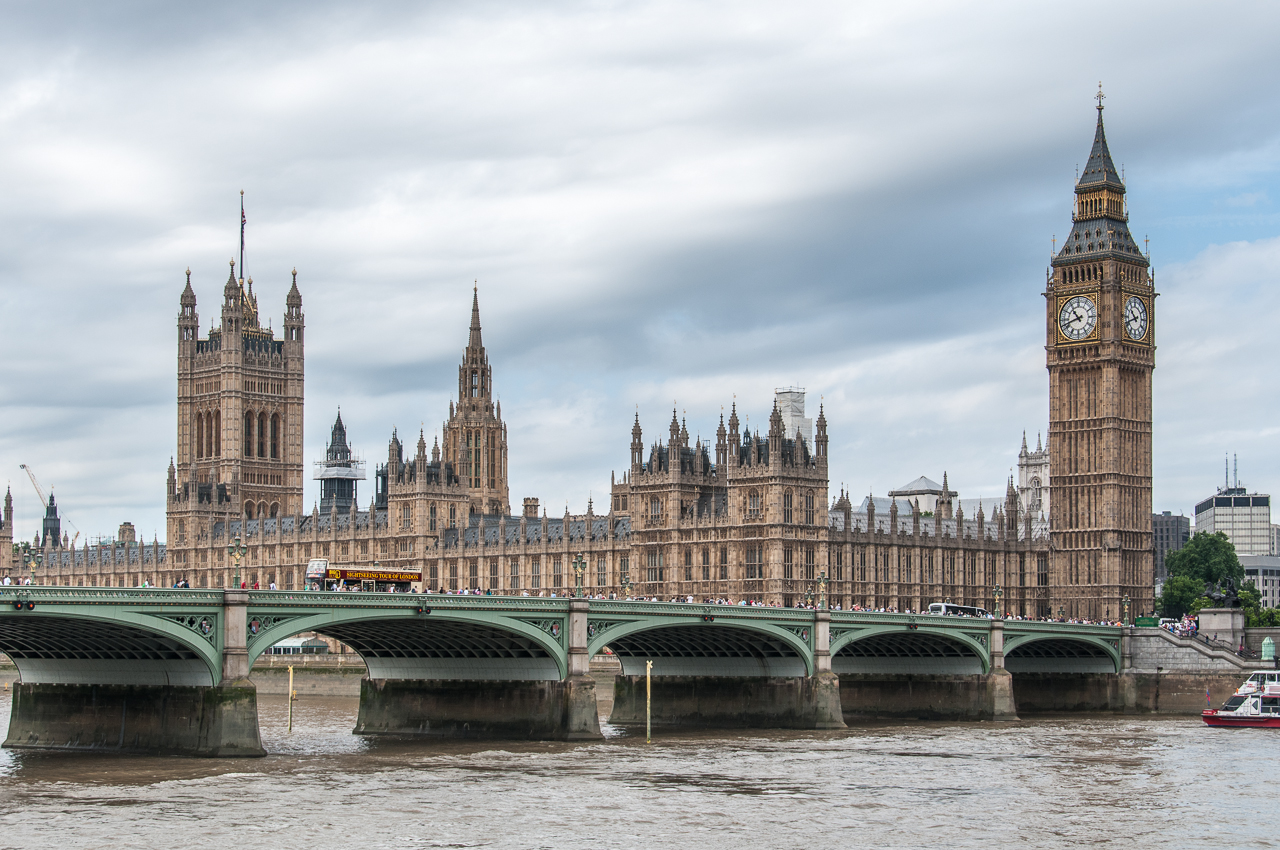
Westminster, London - where I will be working next year! Photo: Wikipedia Commons, Daniel Bron


So yes, a dream come true. It still doesn't feel real to say the words out loud but next year I will be working at Westminster!!!! It feels especially nice because all the activities and societies I have been involved with -the Science in Policy Group; the British Science Association; the Society for Experimental Biology; Pint of Science, etc- played a part in getting me through as I drew on all of these experiences in the interview. I have often felt guilty for spending time on these activities instead of my main PhD work, even if I try to make up for it by working evenings and weekends. It is also amazing to reflect on how far I have come from the schoolgirl who was too shy to speak in front of the class. Many times in the past I have gone for opportunities like these, only to have fallen short: there was always a slightly better candidate, with more experience, confidence, etc. But just for once, it was actually me.

I can't get carried away though as I still have to write my thesis up first.  After my lab work stops at the end of September, I will focus on getting as much written up as possible before starting at POST in February next year. At least it gives me some time to get a new wardrobe! It does seem slightly ironic that I will spend three months writing up the bulk of my thesis, which will only be read by 2-3 people, before going on to work on a policy briefing note which could be read by hundreds of people, including MPs and other policy makers. I will be proud of both of them of course but in terms of impact, it doesn't come close!

Right, better get back to the plants! Thanks for reading – I hope you have a great week ahead. 
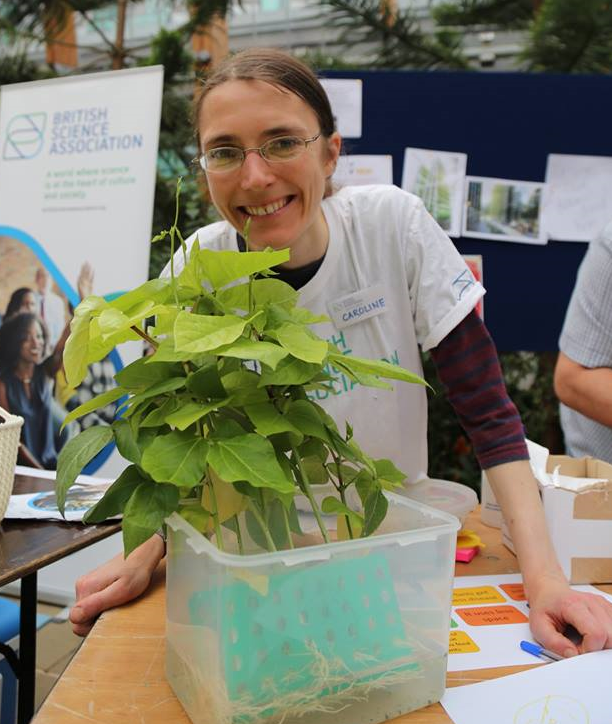
Doing what I love best - Science Communication!  Photograph by Daniella Sasaki